KORA Himalayan Cashmere
A Story Woven
Into Every Thread
Three generations. One family. The mountains as witness.
The Name
KORA
Sacred Circumambulation
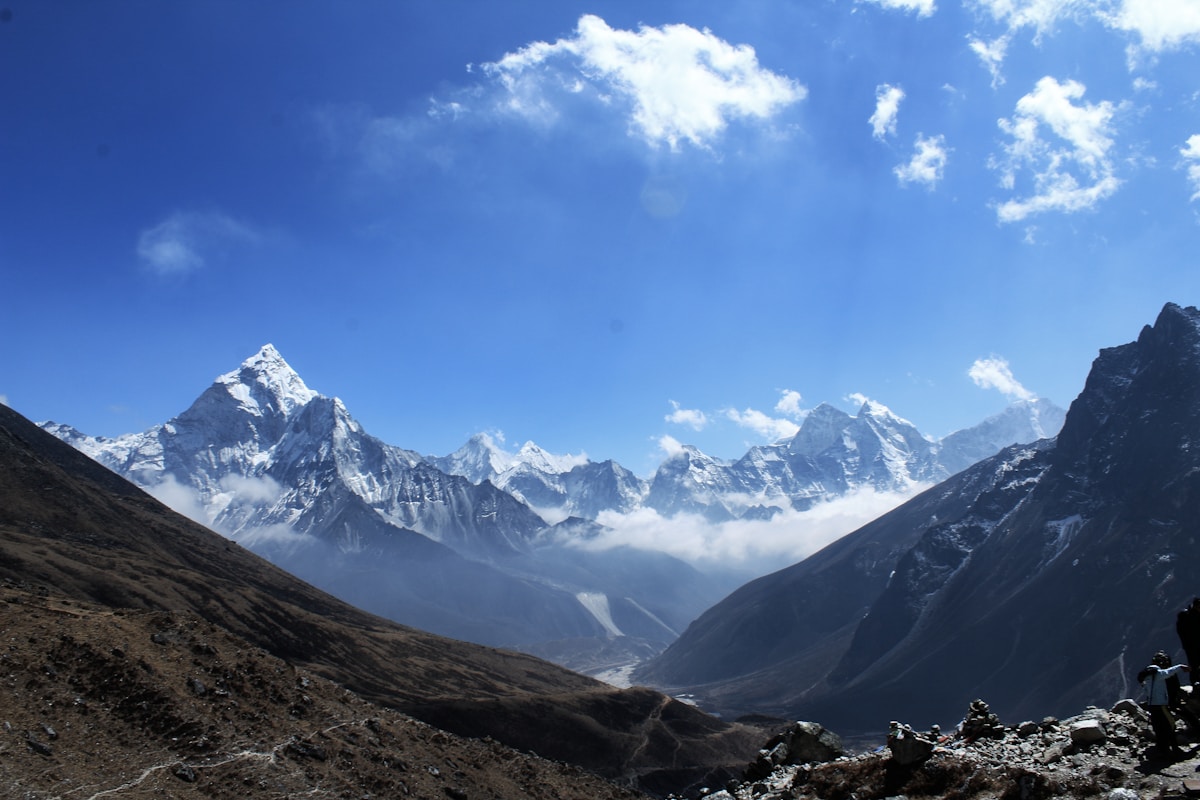
In the Tibetan Buddhist tradition, a kora is a walking meditation — a sacred circumambulation around a mountain, a temple, a place of reverence. The walker circles in quiet contemplation, each step an offering, each return to the starting point a deeper understanding.
Our name carries this intention. Every garment we create is a return — to the hands that first touched the fibre, to the mountains that shaped the goat, to the wisdom passed from grandmother to granddaughter across three generations.
To wear KORA is to walk this circle with us.
Our Lineage
Three Generations of Hands
Cashmere weaving in the Kathmandu Valley is not a profession — it is inheritance. Knowledge flows from grandmother to mother to daughter, each generation refining what the last perfected.
1962
The First Thread
Our grandmother, Lhakpa, began combing cashmere goats in the high pastures of Mustang. She sold raw fibre to traders in Kathmandu, dreaming of one day weaving the wool herself. In 1968, she purchased her first hand-loom — the same wooden frame that still sits in our workshop today.
1989
The Workshop Takes Root
Lhakpa's daughter, Pema, expanded the single loom into a small workshop in Bhaktapur. She trained the first three artisans — neighbours who would become lifelong collaborators. Pema insisted on hand-spinning when the industry was racing toward machines. She knew that speed could not replace soul.
2024
KORA Is Born
The third generation — Pema's children — launched KORA to share this heritage with the world. We honour our grandmother's loom and our mother's uncompromising standards. Every KORA piece carries their names in its weave, whether you can see them or not.
Meet the Hands
The Artisans Behind KORA
Today, our workshop is home to twelve artisans. Three of them — Asha, Maya, and Durga — have been with us since the beginning.
Asha
Master Weaver
28 years
Every thread I weave carries a prayer for the one who will wear it. Cashmere is not a fibre — it is a conversation between the mountains and the hands that shape them.
Maya
Embroidery Artist
15 years
My grandmother taught me to embroider when I was seven. The needle in my hand feels like an extension of myself. Each stitch tells a story only the wearer will truly understand.
Durga
Quality Master
20 years
Quality is not a final check — it is present in every step. From the first sorting of fibres to the last finishing touch, I feel the garment and know if it is ready to carry our name.
The Process
From Mountain to Garment
No machines. No shortcuts. Four deliberate stages — each guided entirely by hand, each a tradition refined over decades in the Kathmandu Valley.
Step 01
Hand-Combing
Each spring, Changthangi goats are gently hand-combed — never sheared. Only the softest underdown fibres, finer than 16 microns, are selected from the raw fleece.
Step 02
Charkha Spinning
On traditional hand-turned charkha wheels, fibres become yarn. This slow rhythm — unchanged for centuries — preserves the natural loft and breathability that machines destroy.
Step 03
Hand-Loom Weaving
Wooden looms, operated entirely by hand and foot, weave yarn into dense, enduring fabric. Each row is pulled tight by feel — a rhythm learned over decades, not programmed into a machine.
Step 04
Hand-Finishing
Every garment is washed in soft Himalayan water, gently stretched to shape, and inspected stitch by stitch. Only when Durga nods does it receive the KORA label.
This Story Continues
With You
Every KORA garment carries within it the high-altitude winds of Mustang, the rhythmic hum of Kathmandu looms, and the quiet prayers of three generations of women who believed that softness could change the world.
Discover the Collection